
If you’re dealing with severe toothache, a chipped or broken tooth, or a knocked-out tooth, it’s time to see an emergency dentist. Look out for signs of infection like swelling, fever, or worsening pain, and address issues with dental work or appliances promptly. Ignoring these problems can lead to serious complications. Act fast to preserve your oral health and discover how to quickly find the right emergency dentist for your needs ahead.
Summary Point
- Severe toothache may indicate underlying problems requiring immediate dental evaluation to prevent complications and relieve pain.
- A chipped or broken tooth can cause discomfort and increase infection risk, needing prompt attention from an emergency dentist.
- If a tooth is knocked out, acting quickly within 30 minutes can enhance the chances of successful reattachment.
- Signs of infection, such as swelling, throbbing pain, or fever, necessitate fast contact with an emergency dentist.
- Problems with dental work, like loose fillings or broken crowns, can lead to further damage and should be addressed urgently.
Severe Toothache That Won’t Go Away

If you’re experiencing a severe toothache that won’t go away, it’s essential to seek dental care as soon as possible.
Persistent pain may indicate underlying issues like tooth sensitivity or even a dental abscess. You might notice discomfort when consuming hot or cold foods, making daily activities unbearable. Ignoring this pain could lead to more serious complications, like infection spreading.
A dental abscess, a pus-filled pocket at the root, can result in swelling and fever if left untreated. By reaching out to a dentist promptly, you can prevent further damage and relieve your suffering.
Serving others means addressing these critical health concerns, ensuring that you not only take care of yourself but also set an example for those around you.
Chipped or Broken Tooth
A chipped or broken tooth can be both painful and alarming. If you’re experiencing dental pain after such an injury, it’s essential to seek help quickly.
Delaying tooth repair may lead to further complications, including infection or increased discomfort. You might notice sharp edges that can irritate your gums and cheeks, worsening the situation.
To manage the immediate pain, rinse your mouth with warm salt water and avoid chewing on that side.
When you contact an emergency dentist, let them know about your injury. They’re skilled in evaluating damage and providing effective solutions, whether it’s a filling or more extensive repairs.
Addressing a chipped or broken tooth promptly will bring relief and prevent further problems down the road.
Knocked-Out Tooth
Losing a tooth can be shocking and painful, but acting quickly can greatly enhance the chances of saving it. If you or someone you know experiences dental trauma and has a knocked-out tooth, don’t panic!
First, locate the tooth, holding it by the crown, not the root. Rinse it gently with water, avoiding soap. If possible, try to place it back in the socket. If that’s not an option, keep it in a container with a bit of milk or saline to protect it.
Time is critical—seek emergency dental help within 30 minutes for the best chance of tooth reattachment. Your swift action can make a significant difference in restoring a beautiful smile!
Signs of Infection
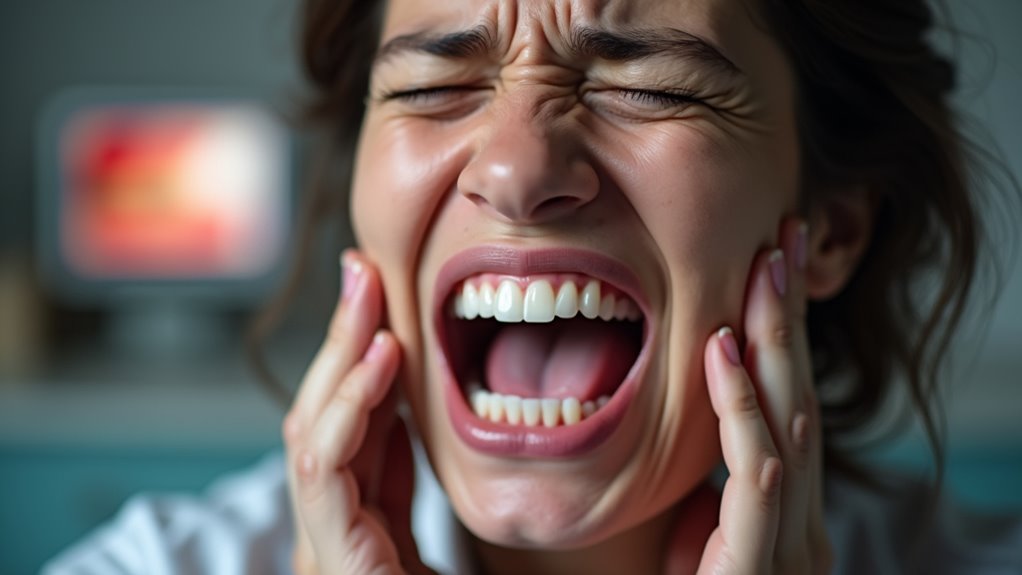
After dealing with a knocked-out tooth, it’s important to be aware of the signs of infection that can follow dental trauma.
You should look for these key inflammation indicators:
- Swelling: If you notice excessive swelling around the affected area, it could signal an infection.
- Pain: Persistent or worsening pain, especially if it’s throbbing, may indicate signs of abscess.
- Fever: A noticeable increase in body temperature can suggest that your body is fighting an infection.
Recognizing these signs early is vital for preventing further complications.
If you experience any of these symptoms, don’t wait—contact an emergency dentist to guarantee your dental health remains a priority.
Taking quick action can lead to better outcomes.
Trouble With Dental Work or Appliances
It’s not uncommon for people to experience issues with dental work or appliances, whether it’s a loose filling, broken crown, or uncomfortable braces.
When you face dental appliance problems, it’s vital to act quickly. For instance, an ill-fitting retainer can hinder your orthodontic progress or even cause damage to your teeth. If you notice persistent pain from a dental appliance, don’t wait; that’s a sign to contact an emergency dentist.
Additionally, if you’ve broken a crown or lost a filling, you may be at risk for further complications without prompt care. Make certain you know how to find a reliable emergency dentist quickly, so you can address these orthodontic issues and ensure your oral health remains intact.