
Maintaining good oral health is essential for your overall well-being, especially concerning heart disease. Poor dental hygiene can lead to gum disease, which increases inflammation and allows harmful bacteria to enter your bloodstream, impacting your heart health. Regular brushing, flossing, and dental check-ups are vital in preventing gum disease and reducing cardiovascular risks. By prioritizing your oral hygiene, you improve not just your teeth but also your heart health. There’s much more to explore on this important connection.
Summary Point
- Poor oral health, particularly gum disease, increases the risk of cardiovascular issues due to inflammation and bacteria entering the bloodstream.
- Oral bacteria can contribute to plaque formation in arteries, posing additional heart health risks.
- Maintaining good dental hygiene lowers the chances of developing both gum disease and heart conditions.
- A healthy lifestyle, including diet and regular exercise, supports both oral health and cardiovascular wellness.
- Regular dental check-ups are vital for early detection of gum disease and potential heart health problems.
Understanding Oral Health and Its Importance

Oral health plays an essential role in overall well-being, yet many people often overlook it. Your oral microbiome is a complex ecosystem that greatly influences not just your mouth but also your body. Maintaining good dental hygiene is crucial to keeping this balance.
When you brush and floss regularly, you help prevent harmful bacteria from taking over, which can lead to various health issues. Neglecting dental hygiene can disrupt the oral microbiome, resulting in cavities, gum disease, and even systemic problems.
The Connection Between Gum Disease and Heart Health
Neglecting your oral health can set off a chain reaction that extends beyond your mouth, particularly impacting your heart health. Gum disease isn’t just about swollen gums; it poses a significant cardiovascular risk.
Studies reveal that inflammation from gum disease can affect your entire body, including your heart. Here’s what you should know:
- Gum disease can introduce bacteria into your bloodstream.
- Inflammation caused by gum disease may narrow blood vessels.
- Individuals with gum disease often experience an increased risk of heart disease.
- Good oral hygiene practices can lower your risk of both gum disease and heart conditions.
How Bacteria From the Mouth Affects the Heart
While you might think of your mouth as a separate entity, the reality is that bacteria from your gums can have a profound impact on your heart health. Various bacterial types from periodontal disease can enter your bloodstream through inflamed gums, affecting heart mechanics.
These bacteria can contribute to plaque formation in your arteries, leading to narrowed passages that strain your heart. Additionally, inflammation triggered by these bacteria can result in a heightened risk of cardiovascular issues.
Risk Factors Linking Oral Hygiene and Cardiovascular Disease

Maintaining good oral hygiene is vital, as inflammation in your mouth can greatly impact your heart health.
Understanding the mechanisms by which bacteria spread and the lifestyle habits that contribute to both oral and cardiovascular issues is essential.
Inflammation and Heart Health
Oral hygiene plays an essential role in managing inflammation, which is a significant risk factor for cardiovascular disease. Poor oral health can lead to gingival inflammation, triggering an inflammatory response that may harm your heart.
To protect your cardiovascular health, consider these key points:
- Regular brushing and flossing can reduce plaque buildup.
- Routine dental check-ups help identify and address oral issues early.
- A healthy diet supports both oral and cardiovascular health.
- Staying hydrated aids in maintaining oral tissues and preventing inflammation.
Bacterial Spread Mechanisms
Bacteria in your mouth can pose a serious risk to your heart health, particularly when it comes to the mechanisms through which they spread.
The oral microbiome, a complex ecosystem of microorganisms, can facilitate bacterial transmission into your bloodstream.
When you have poor oral hygiene, plaque buildup allows harmful bacteria to enter your circulatory system, contributing to inflammation. This process can form blood clots and eventually lead to cardiovascular disease.
Regular dental care helps maintain a balanced oral microbiome, reducing the likelihood of bacterial transmission.
Lifestyle Habits Impact
While many people overlook the connection between their daily habits and overall health, the lifestyle choices you make can greatly impact both your oral hygiene and cardiovascular risk.
By adopting specific lifestyle modifications, you can encourage significant health improvements that benefit both your mouth and heart.
Consider focusing on:
- Maintaining a balanced diet rich in fruits and vegetables
- Quitting smoking and reducing alcohol consumption
- Practicing regular physical activity
- Prioritizing dental hygiene with daily brushing and flossing
These choices not only enhance your oral health but also reduce the risk of heart disease.
When you invest in your daily habits, you’re taking proactive steps toward a healthier future for yourself and those you care about.
Signs and Symptoms of Gum Disease
Gum disease often presents subtle yet significant signs that shouldn’t be overlooked. You might notice some gingivitis symptoms like swollen, reddened gums or persistent bad breath.
One of the first red flags is bleeding gums, especially when brushing or flossing. If you see this, it’s vital to pay attention, as it may indicate the early stages of gum disease.
Additionally, you may experience discomfort or sensitivity in your gums, which can become more pronounced over time. Ignoring these signs could lead to more severe dental issues and potentially compromise your overall health.
Staying aware of these symptoms can help you serve not only your oral health but also that of those around you.
Preventive Measures for Better Oral and Heart Health
To maintain both oral and heart health, it’s essential to practice daily oral hygiene and schedule regular dental check-ups.
Brushing and flossing your teeth can prevent plaque buildup and gum disease, reducing the risk of heart complications.
Prioritizing these preventive measures can lead to improved overall well-being.
Daily Oral Hygiene
Maintaining daily oral hygiene is essential for not only a healthy smile but also for supporting heart health.
You can take simple steps to improve your routine:
- Use proper toothbrush techniques: Brush at a 45-degree angle and use circular motions to effectively clean your teeth and gums.
- Choose the right toothbrush: Opt for a soft-bristled toothbrush to minimize gum damage while maximizing plaque removal.
- Monitor your flossing frequency: Aim to floss at least once a day to remove debris between teeth, preventing gum disease.
- Rinse with an antibacterial mouthwash: This can help reduce bacteria that cause gum disease and potentially impact heart health.
Regular Dental Check-ups
Regular dental check-ups play an essential role in safeguarding both your oral and heart health.
By visiting your dentist regularly, you not only maintain your teeth and gums but also help minimize the risk of heart disease. During these visits, your dentist can identify potential issues, create personalized treatment plans, and provide guidance on improving oral hygiene.
If you experience dental anxiety, communicating this with your dentist can lead to strategies that make your experience more comfortable.
Remember, consistent check-ups allow for early detection of problems, ensuring better outcomes for both your oral and cardiovascular health.
Dietary Choices That Support Oral and Cardiovascular Wellness
While you may not think about it often, what you eat plays an essential role in both your oral health and heart wellness. Making informed dietary choices can greatly benefit both areas.
To promote good health, focus on incorporating:
- Fresh fruits and vegetables rich in nutrient-rich antioxidants
- Whole grains that maintain steady blood sugar levels
- Lean proteins like fish and poultry that support heart health
- Low-sugar alternatives to satisfy your sweet tooth without spiking sugar consumption
These selections help reduce inflammation, combat plaque, and maintain healthy blood circulation.
By prioritizing these dietary choices, you’ll not only enhance your smile but also support your cardiovascular system.
The Role of Regular Dental Check-ups in Heart Health
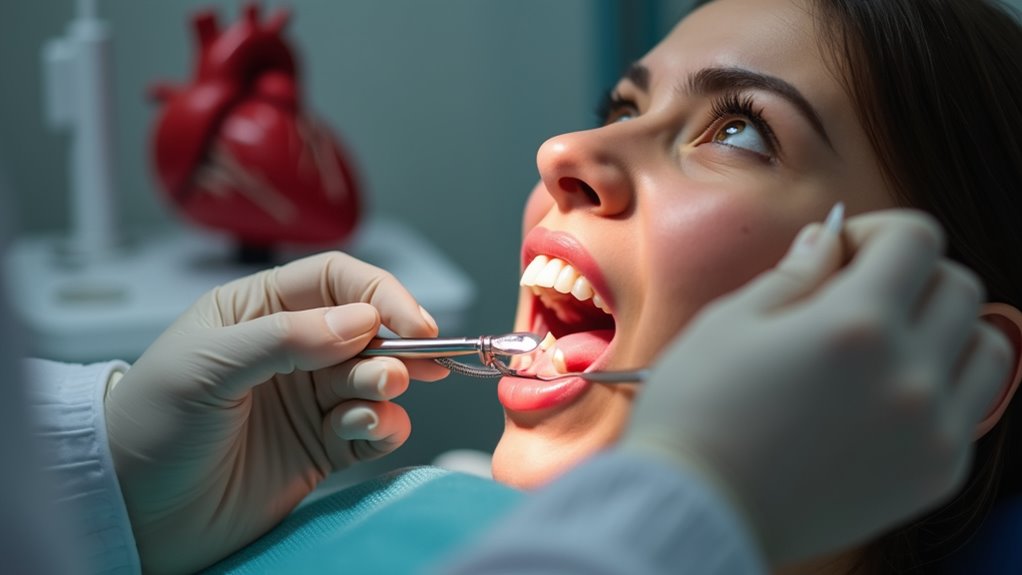
Although you might view dental check-ups as merely a routine part of oral care, they play an essential role in heart health as well. Regular visits allow for preventive screenings and thorough oral assessments that can reveal underlying health issues linked to cardiovascular disease.
During these appointments, your dentist checks for signs of gum disease and inflammation, which can affect your heart. By addressing oral health problems early, you not only improve your smile but also reduce systemic risks associated with heart conditions.
Additionally, maintaining good oral hygiene can lower inflammation levels, further protecting your heart. Prioritizing these check-ups empowers you to serve both yourself and others by fostering overall health and wellness.
Your next appointment could be a stepping stone to better heart health.