
Digital X-rays provide numerous advantages over traditional radiography. You’ll notice improved image quality, allowing for better diagnostic accuracy. They also reduce radiation exposure, enhancing patient safety. Processing times are faster, enabling immediate access to images, which streamlines workflows in medical settings. Additionally, digital storage simplifies data management and minimizes environmental impact by cutting down on chemical waste and paper usage. Discover more about how these innovations can transform healthcare practices.
Summary Point
- Digital X-rays provide superior image clarity, improving diagnostic accuracy and enabling better treatment decisions.
- They significantly reduce radiation exposure for patients, ensuring a balance between effective diagnostics and safety.
- Immediate access to digital images enhances processing efficiency and minimizes diagnosis delays in clinical settings.
- Digital imaging eliminates the need for chemical processing, resulting in reduced environmental waste and sustainability benefits.
- Cost savings arise from lower expenses on film and materials, leading to better resource allocation in medical practices.
Improved Image Quality
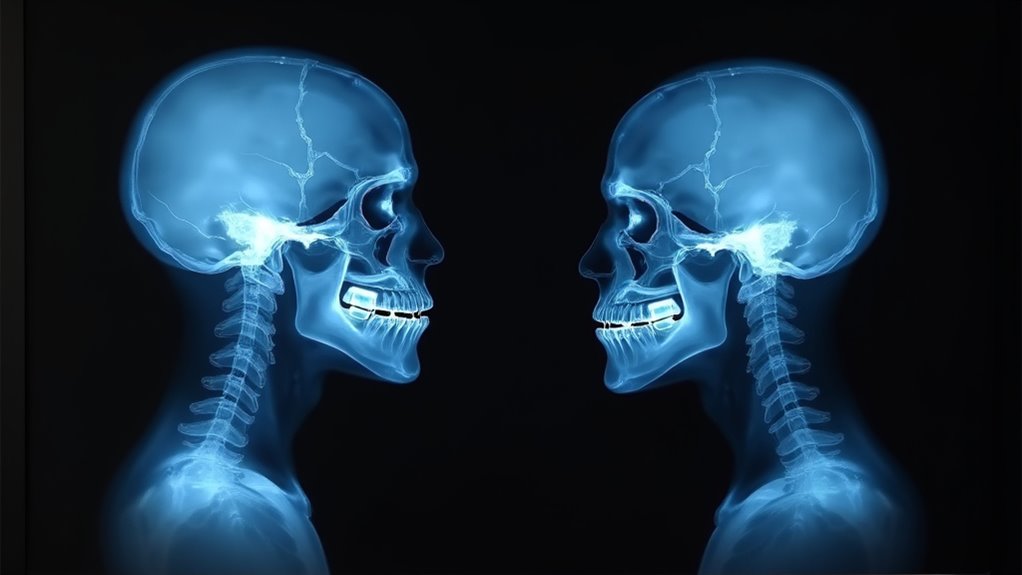
When comparing digital X-rays to traditional radiography, you’ll find that improved image quality is one of the most important advantages of the digital format. Digital X-rays provide superior image clarity, allowing you to discern finer details within a patient’s anatomy.
This heightened clarity enhances diagnostic accuracy, leading to more informed treatment decisions. With the ability to manipulate images—adjusting brightness and contrast—you’re better equipped to analyze various conditions.
Furthermore, digital images can be easily stored and shared, facilitating collaboration amongst healthcare professionals for second opinions.
Reduced Radiation Exposure
Digital X-rays not only enhance image quality but also greatly reduce radiation exposure for patients. This technology utilizes advanced imaging protocols that require less radiation to produce high-quality images, markedly increasing patient safety.
Unlike traditional radiography, which often subjects patients to higher doses, digital systems optimize exposure by adjusting settings according to specific diagnostic requirements. Furthermore, the ability to instantly assess image quality means adjustments can be made in real time, further minimizing unnecessary exposure.
For healthcare providers committed to prioritizing patient welfare, employing digital X-rays guarantees a balance between accurate diagnostics and the lowest possible radiation levels. Ultimately, this practice not only safeguards patients but also fosters trust in the care they receive.
Faster Processing Times
While traditional radiography often requires prolonged waiting periods for film development, faster processing times with digital X-rays transform how clinicians deliver care.
With digital technology, you can obtain immediate images, reducing delays in diagnosis and treatment. This rapid turnaround not only enhances operational efficiency but also greatly improves the patient experience, allowing for quicker interventions when needed.
Additionally, the clarity of digital images aids in better diagnostic accuracy, ensuring that you can identify issues more readily and make informed decisions about treatment options.
In a healthcare setting focused on serving others, these faster processing times represent a critical advancement, ensuring that patients receive timely and effective care while optimizing clinical workflows.
Enhanced Data Storage and Retrieval
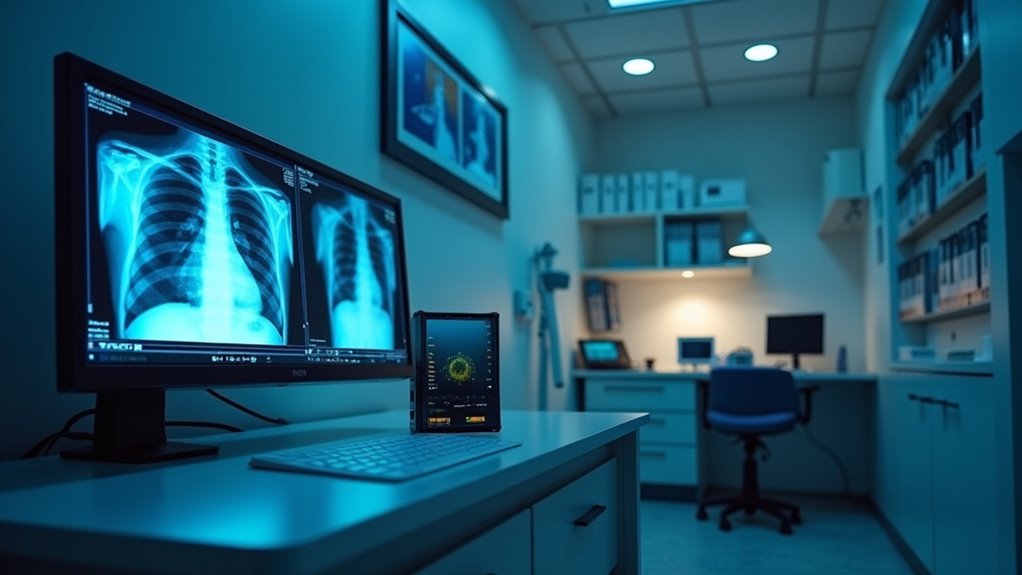
With digital X-rays, you gain quick access to images, streamlining workflow in your practice.
These systems often incorporate cloud backup solutions, ensuring your data is securely stored and easily retrievable.
This enhanced data management not only improves efficiency but also elevates patient care by providing timely access to critical information.
Quick Access to Images
Accessing images swiftly is an essential advantage of enhanced data storage and retrieval systems in radiography. With digital X-rays, you can view images almost immediately after acquisition, streamlining the process for real-time diagnosis. This immediate access allows healthcare providers to make informed decisions quickly, improving efficiency and patient outcomes.
Furthermore, enhanced storage solutions eliminate the need for physical film storage, which can be cumbersome and time-consuming to access. Instead, you’ll find organized digital files that can be retrieved within seconds, promoting improved collaboration among medical teams.
This capability not only enhances workflow but also notably boosts patient satisfaction, as timely results are vital for patient care and peace of mind. Digital systems really transform the way you serve your patients effectively.
Cloud Backup Solutions
As digital X-ray systems evolve, cloud backup solutions have become essential for enhanced data storage and retrieval. Utilizing these solutions not only streamlines your workflow but also prioritizes patient care.
Here are key features you should consider:
- Cloud Security Measures: Protect sensitive patient data with robust encryption and multi-factor authentication, ensuring compliance with regulations.
- Scalability: Easily expand your storage capacity as your practice grows without investing in physical infrastructure.
- Data Recovery Options: Safeguard against data loss through automated backups, enabling quick recovery and minimizing downtime.
Embracing cloud backup solutions empowers you to maintain efficient practices while focusing on delivering superior patient care.
With secure, reliable data management, you can rest assured that your X-ray images are safe and accessible anytime.
Streamlined Workflow in Medical Facilities
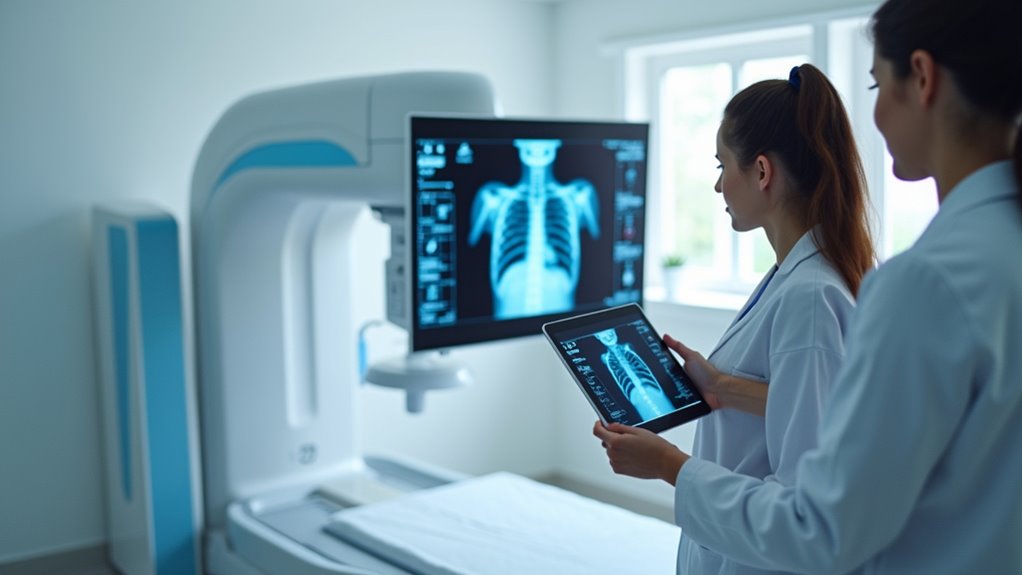
While traditional radiography often involves cumbersome film processing and manual handling, the adoption of digital X-rays greatly enhances workflow efficiency in medical facilities.
You’ll find that digital imaging streamlines processes, enabling quicker image acquisition and immediate access for review. Electronic storage eliminates physical film, reducing clutter and improving organization.
While integration challenges may arise as facilities adapt, investing time in staff training guarantees that your team can maximize the benefits of this technology.
With a focus on digital systems, communication among departments improves, leading to faster diagnoses and better patient care.
Ultimately, you’ll experience a smoother workflow that allows your staff to focus on what truly matters: providing exceptional care to patients in a timely manner.
Environmental Benefits of Digital Imaging
When you choose digital imaging, you’re contributing to a significant reduction in chemical waste typically associated with traditional radiography.
Digital X-rays also consume less energy, making them a more sustainable option for medical facilities.
Additionally, the shift to paperless records minimizes paper usage, further benefiting the environment.
Reduced Chemical Waste
Because digital imaging eliminates the need for chemical processing, it greatly reduces chemical waste generated in medical facilities.
This shift not only benefits your practice but also supports environmental sustainability.
Here’s how digital X-rays help manage chemical disposal and waste effectively:
- Minimized Hazardous Waste: Digital imaging removes the need for developing chemicals, greatly decreasing hazardous waste production.
- Simplified Waste Management: You won’t have to deal with the complexities of disposing of toxic substances, streamlining your facility’s waste management processes.
- Eco-friendly Practices: Embracing digital technology aligns your practice with environmentally conscious approaches, enhancing your commitment to sustainability.
Lower Energy Consumption
Digital X-ray systems contribute considerably to lower energy consumption in medical facilities, enhancing their overall environmental impact.
Compared to traditional radiography, these systems use markedly less power, operating with advanced energy efficiency that reduces operating costs.
You’ll find that the technology requires less energy per procedure, which not only cuts down on electricity bills but also promotes sustainability within your clinic or hospital.
By minimizing energy use, you’re participating in eco-friendly practices that benefit both your facility and the broader community.
This commitment to lower energy consumption leads to substantial cost savings over time, allowing you to allocate resources more effectively in serving your patients.
Ultimately, digital X-rays reflect a conscientious choice in healthcare imaging.
Less Paper Usage
The shift to digital imaging greatly reduces paper usage in medical facilities, enhancing environmental sustainability.
By implementing digital X-rays, you’re contributing to significant paper reduction while improving patient care. Here’s how:
- Digital Records: Digital images eliminate the need for physical film prints, allowing instant access to patient information without paper waste.
- Eco-Friendly Printing Options: When printing is necessary, you can utilize eco-friendly printing methods that minimize ink and paper consumption.
- Storage Solutions: Digital systems allow convenient storage and retrieval of records, reducing the need for filing cabinets and further decreasing paper usage.