
When considering dentures in Canada, expect costs to range from $700 for partials to $3,500 for full dentures. Factors like material quality and your location can influence these prices. Don’t forget additional expenses like maintenance and consultation fees. Many insurers offer some coverage, and financial assistance programs can help those in need. There are also smart strategies to save, like joining membership plans or seeking discounts. Discover more tips to manage your dental costs effectively.
Summary Point
- Full dentures in Canada typically range from $1,000 to $3,500, while partial dentures cost between $700 and $2,500.
- Implant-supported dentures offer stability but can range from $3,000 to $30,000, significantly impacting budget considerations.
- Explore government assistance programs, community clinics, and charitable organizations for support with denture costs.
- Regular dental check-ups and preventive care can help maintain oral health, potentially reducing the need for costly dentures.
- Consider creating a budget, seeking discounts, and inquiring about payment plans to manage denture expenses effectively.
Overview of Dentures in Canada

When you’re considering dentures in Canada, it’s essential to understand your options and the factors that influence their cost.
Dentures are primarily made from various denture materials, including acrylic, metal, and porcelain. Each material offers different durability, aesthetics, and comfort levels, greatly impacting your dental health.
Choosing the right material can often feel overwhelming, but it’s key for ensuring both functionality and confidence in your smile.
Evaluating your lifestyle and preferences will help guide your decision. Remember, it’s important to consult with a dental professional who understands your needs. They can provide invaluable insight on how specific denture materials can affect your overall dental health and well-being, ultimately helping you make an informed choice for the best possible results.
Types of Dentures and Their Costs
When considering dentures, it’s important to understand the different options available to you.
Full dentures replace all the teeth in your mouth, while partial dentures fill in gaps for missing teeth.
If you’re looking for a more stable solution, implant-supported dentures are also an option, but their costs can vary considerably.
Full Dentures Overview
Full dentures are a popular solution for individuals missing all their teeth, offering both functionality and improved aesthetics.
You’ll find various denture materials used in full dentures, including acrylic and metal frameworks, with costs ranging from $800 to $2,500 in Canada. Understanding these options helps you make informed decisions.
To maintain your dentures and oral health, practicing good dental hygiene is vital. Make sure to clean your dentures daily and brush your gums and tongue to prevent irritation and infections.
Regular dental check-ups are essential for ensuring your dentures fit properly and remain in good condition.
Partial Dentures Explained
If you’re missing one or more teeth, partial dentures can be an effective way to restore your smile and maintain oral function. There are various partial denture types, including flexible, acrylic, and metal frameworks, each offering unique benefits depending on your specific needs and budget.
Flexible dentures are lightweight and comfortable, while metal frameworks provide durability and stability. To guarantee longevity and function, proper partial denture maintenance is essential.
Regular cleaning and occasional adjustments can help keep your dentures in good condition. Additionally, visiting your dentist regularly can address any concerns and help you maintain peak oral health.
Implant-Supported Dentures Cost
As you explore options for replacing missing teeth, implant-supported dentures can be a highly effective choice that combines functionality with aesthetics.
These dentures are anchored to dental implants, which provide a more stable fit compared to traditional dentures. The cost typically ranges from $3,000 to $30,000, depending on various implant types and the number of implants needed.
Longevity factors play a vital role in this investment; well-maintained implants can last over a decade.
Consider consultations with your dental provider to discuss your specific needs and how to maximize the potential benefits.
Factors Influencing Denture Prices
When considering dentures, you’ll find that several key factors play a vital role in determining their cost. First, the quality of materials used in the dentures is essential. Higher-quality materials not only enhance durability but also improve comfort and aesthetics.
You’ll want to choose options that suit your needs while considering your budget. Additionally, regional pricing can impact costs considerably. Dentures may vary in price depending on where you live, as local dental markets, demand, and labor costs come into play.
It’s important to research and compare prices in your area while ensuring that the provider you choose is reputable. By understanding these influences, you can make informed decisions while being mindful of your budget and care needs.
Average Costs of Full vs. Partial Dentures
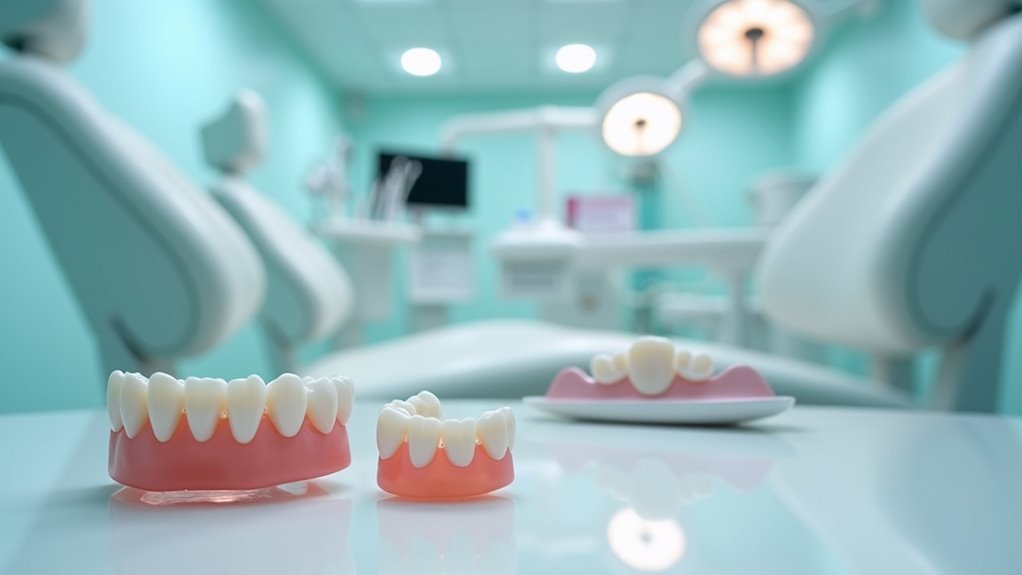
Understanding the average costs of full versus partial dentures can help you make an informed decision about your dental needs.
Full dentures typically range from $1,000 to $3,500, depending on materials and customization. This all-encompassing solution is ideal if you’re missing all your teeth.
On the other hand, partial dentures generally cost between $700 and $2,500, offering a great solution if you still have some natural teeth.
If budget constraints concern you, consider full denture financing options to spread the cost over time, making it more manageable.
Explore various partial denture options that can fit different budgets, ensuring you receive the care needed without compromising quality.
Choosing the right solution enhances both function and comfort in your daily life.
Additional Expenses Beyond Denture Prices
When budgeting for dentures, you need to contemplate more than just the initial price.
You’ll likely face additional expenses such as consultation fees and costs for maintenance or repairs down the line.
Understanding these factors can help you plan better and avoid any unexpected financial surprises.
Initial Consultation Fees
Before diving into the costs of dentures, it’s essential to contemplate initial consultation fees, which can vary greatly among dental professionals. These fees generally cover a thorough evaluation of your oral health, ensuring you’re on the right path to finding the best dentures for your needs.
The initial consultation benefits include personalized treatment plans and recommendations tailored to you. Don’t forget, a consultation follow-up may be necessary to discuss your options further, which could incur additional costs.
To help manage your budget, consider clinics offering free or discounted consultations, as they can greatly reduce your upfront expenses. Understanding these fees will arm you with knowledge to make informed choices while prioritizing your dental well-being.
Maintenance and Repair Costs
While dentures can provide you with a new smile, it’s important to remember that their costs don’t end with the initial purchase. Maintenance and repair expenses can add up, so it’s wise to budget accordingly.
Here are some key considerations:
- Regular Cleaning: Use appropriate solutions to maintain your dentures. It helps prevent stains and keep them fresh.
- Professional Adjustments: You may need periodic fittings or adjustments from your dentist to ascertain a comfortable fit.
- Repair Techniques: Sometimes, dentures crack or break. Knowing basic repair techniques or when to seek professional help can save you money.
Insurance Coverage for Dentures
Have you considered how insurance can help alleviate the costs of dentures? Many dental insurance plans offer coverage for dentures, but it’s essential to understand your policy’s coverage limits.
Some plans might only cover a portion of the total cost, while others could have waiting periods before benefits kick in. To maximize your benefits, review your dental insurance policy closely. Look for any clauses pertaining to dentures and consult your dentist about what’s covered.
If your insurance isn’t enough, don’t hesitate to discuss payment options with your provider. They can often recommend budget-friendly solutions to help you manage out-of-pocket expenses.
Financial Assistance Programs
If insurance coverage doesn’t fully meet your denture needs, exploring financial assistance programs may provide additional relief.
Many Canadians find it beneficial to look into various support options, such as:
- Government Aid: Check your provincial and federal resources for programs specifically designed for dental care assistance, especially for seniors or those on low incomes.
- Charity Programs: Organizations like the Dental Lifeline Network provide services or funding for eligible individuals who can’t afford dentures.
- Community Health Clinics: Local clinics often offer sliding scale fees based on income, making dental services more affordable.
Tips for Saving Money on Dentures
Finding ways to save money on dentures is essential, especially given the potential costs involved. Start by creating a budget that includes expected dental expenses. This gives you a clear view of what you can afford and helps you prioritize.
Look for dental discounts offered by local clinics or dental schools, where students provide services under supervision at reduced rates. You might also consider exploring membership plans that offer lower prices for dental work.
Don’t hesitate to ask about payment plans; many dentists are willing to accommodate your financial situation.
Finally, keep in mind that investing in preventive care can lessen costs down the road. By utilizing these budgeting tips and discounts, you can manage your expenses more effectively.