
To overcome dental anxiety and make your visit stress-free, start by identifying your triggers, like specific sounds or unfamiliar environments. Communicate openly with your dentist about your fears; they can tailor their approach to your needs. Practice relaxation techniques, such as deep breathing or visualization, beforehand to calm your nerves. Consider sedation options if needed for extra comfort. Finally, schedule appointments during quieter times to minimize stress. There’s more to explore for a smoother experience.
Summary Point
- Identify personal anxiety triggers and discuss them with your dentist for a tailored approach to your care.
- Practice relaxation techniques, such as deep breathing and visualization, before and during your appointment to ease anxiety.
- Schedule dental visits during quieter times to minimize stress and enhance comfort in the office environment.
- Explore sedation options like nitrous oxide or oral sedation to help manage your anxiety during procedures.
- Communicate openly with your dentist to build a supportive relationship and ensure your concerns are genuinely addressed.
Understand Your Anxiety Triggers

When you understand your anxiety triggers, you can take significant steps toward managing your dental fears. Start by identifying personal triggers that might evoke anxiety. Is it the sound of dental tools, the unfamiliar environment, or perhaps the fear of pain?
Reflecting on these aspects can help you gain insights into what specifically concerns you. It’s also beneficial to discuss past experiences with trusted friends or family; they might share similar feelings or coping strategies that proved effective.
Communicate With Your Dentist
Understanding your anxiety triggers sets the stage for open communication with your dentist. When you express your feelings about dental visits, you’re paving the way for a supportive relationship.
Share your specific anxieties and past experiences, as this allows your dentist to tailor their approach. Don’t hesitate to ask questions; your dentist wants to guarantee you feel comfortable and informed.
Active listening plays an essential role here—your dentist should genuinely address your concerns and provide reassurances. Remember, your feedback is important; it helps them refine their techniques to better serve you.
Practice Relaxation Techniques
Practicing relaxation techniques can considerably reduce your dental anxiety, making your visits feel less intimidating. One effective method is deep breathing; take slow, deep breaths in through your nose and out through your mouth. This helps calm your nervous system and centers your thoughts.
Another approach is mindfulness meditation. Before your appointment, set aside a few minutes to focus on the present moment, allowing any anxious thoughts to float away. Visualize a peaceful scene and concentrate on your breath.
Consider Sedation Options
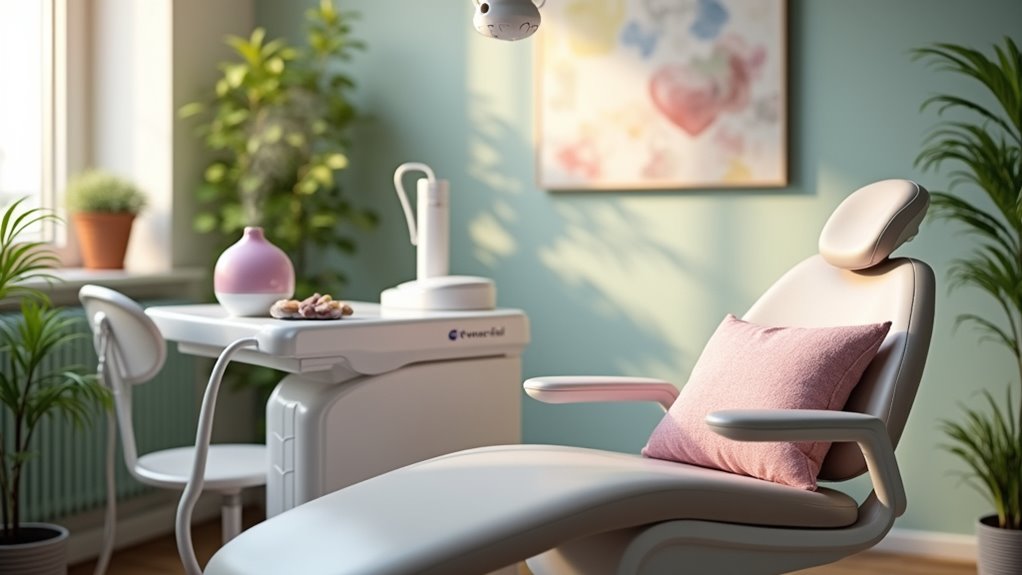
If you’re feeling overwhelmed by the thought of dental procedures, consider exploring sedation options available to you. Many dental practices offer various sedation types to help you feel more at ease during treatment.
One popular option is dental nitrous, also known as laughing gas. It’s quick-acting and allows you to remain conscious while feeling relaxed and comfortable throughout your appointment.
Other sedation methods include oral sedation and IV sedation, each designed to cater to different levels of anxiety and procedure complexity.
Discussing these options with your dentist is essential, as they’ll help you determine the best approach based on your specific needs. Remember, it’s okay to seek help—your comfort and well-being during dental visits are important.
Schedule Wisely for Comfort
Finding the right time for your dental appointment can make a significant difference in how you feel during the visit.
If you have timing flexibility, consider scheduling your appointment during less busy hours, such as mid-mornings or late afternoons. This can create a calmer environment, lessening your anxiety.
When you book the appointment, don’t hesitate to request reminders—these can help ease your mind as the day approaches, allowing you to feel more prepared.
If waiting rooms make you uneasy, ask about any available options for minimizing your wait.
Taking these steps can lead to a more comfortable experience, enabling you to focus on the positive aspects of your dental care and fostering a sense of empowerment over your health.