
Smoking greatly damages your oral health. It raises the risk of gum disease and oral cancer while causing dry mouth, which can lead to cavities and bad breath. Recovery after dental procedures slows down for smokers, increasing complications. Quitting can restore your oral health, improve hygiene, and enhance overall well-being. You’ll notice better breath and taste. Understanding the consequences of tobacco use can provide you with valuable insights for a healthier future ahead.
Summary Point
- Smoking significantly increases the risk of developing gum disease and can lead to tooth loss over time.
- Tobacco use greatly heightens the risk of oral cancer, with severe health consequences.
- Smokers often experience dry mouth, which elevates the chances of cavities and bad breath.
- Smoking impairs healing after dental procedures, resulting in longer recovery times and increased complications.
- Quitting smoking enhances oral health, improving gum conditions, taste, and overall well-being.
The Link Between Smoking and Gum Disease
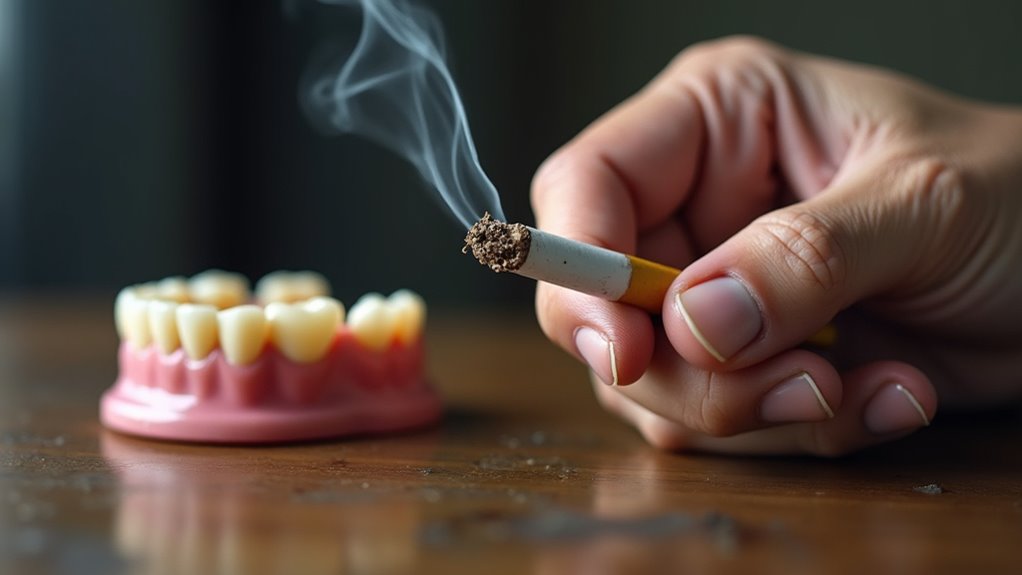
When you smoke, you’re not just harming your lungs; you’re also putting your gums at risk. Smoking statistics reveal that smokers are more likely to develop gum disease than non-smokers.
The toxins in tobacco weaken your body’s immune response, making it difficult to fight off infections, including those affecting your gums. As plaque builds up more easily, you may face issues like swollen gums or even tooth loss over time.
Oral Cancer Risk: A Hidden Consequence of Tobacco Use
While many are aware of the dangers smoking poses to the lungs, its impact on oral health—specifically the heightened risk of oral cancer—is often underestimated.
Smoking and tobacco use greatly increase your chances of developing oral cancer, which can be devastating not just physically but emotionally and financially as well.
The tobacco effects extend beyond stained teeth and bad breath, leading to serious ailments that can alter lives.
If you smoke or chew tobacco, understanding this risk is essential for protecting yourself and your loved ones.
Quitting now can dramatically lower your risk of oral cancer and improve your overall health.
Dry Mouth and Its Effects on Oral Hygiene
Dry mouth, or xerostomia, can greatly impact your oral hygiene and overall health, especially if you smoke or use tobacco products.
Tobacco diminishes saliva production, which is essential for maintaining a balanced oral environment. Saliva helps wash away food particles, neutralize acids, and control oral bacteria. When saliva levels drop, you’re at a higher risk for cavities, gum disease, and bad breath.
It’s important to recognize that this dryness is more than just uncomfortable; it can lead to significant long-term consequences for your dental health. By addressing dry mouth, you not only improve your oral hygiene but also enhance your quality of life.
Quitting smoking is a significant step toward restoring your saliva production and protecting your smile.
Impaired Healing and Recovery After Dental Procedures
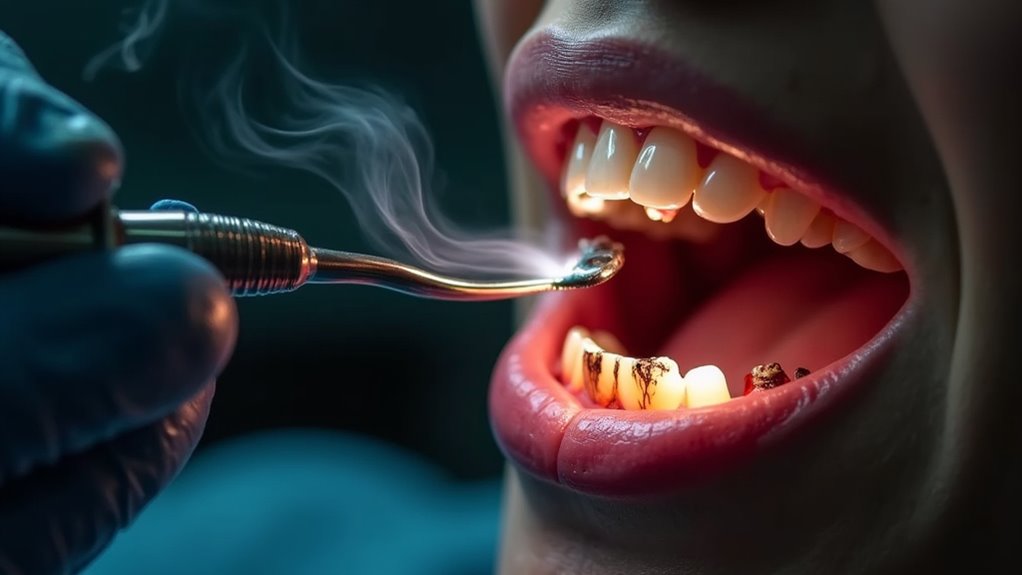
Since smoking reduces blood flow and impairs the immune response, it can greatly hinder your healing and recovery after dental procedures.
When you smoke, you’re increasing the risk of post-operative complications, such as infections and prolonged pain. This disruption in blood circulation also affects tissue regeneration, making it harder for your body to repair itself effectively. You might find that recovery takes longer, and discomfort lingers more than it should.
Additionally, the potential for complications can lead to additional visits to your dentist, costing time and resources. Understanding these risks can motivate you to prioritize your health and well-being.
Supporting your body’s ability to heal not only helps you recover faster but also enhances the effectiveness of any dental treatment received.
The Importance of Quitting for Oral Health Restoration
Quitting smoking is essential for restoring oral health and can lead to significant improvements in your overall well-being.
When you stop, your gum and tooth health begin to improve, as smoking cessation enhances blood flow and promotes healing.
It’s crucial to prioritize your oral hygiene routine during this shift; regular brushing and flossing will support your recovery.
You’ll notice a decrease in bad breath, an improvement in your sense of taste, and reduced risks for gum disease and tooth decay.
Furthermore, by embracing a smoke-free life, you’re not only enhancing your oral health but also setting an example for others in your community.
Your journey can inspire those around you to reflect on the immense benefits of quitting smoking.