
Nutrition plays a crucial role in maintaining strong and healthy teeth. By consuming a balanced diet rich in vitamins and minerals, like calcium, vitamin D, and phosphorus, you can strengthen your enamel and promote gum health. Foods such as dairy products, leafy greens, and crunchy fruits enhance your oral health. Avoid sugary snacks and acidic beverages, as they lead to tooth decay. Staying hydrated also supports saliva production. Discover more ways to nourish your teeth and enhance your smile.
Summary Point
- A balanced diet rich in essential nutrients like calcium, vitamin D, and phosphorus strengthens tooth enamel and supports overall dental health.
- Consuming vitamin C from fruits enhances gum health, which is crucial for preventing gum diseases.
- Dairy products neutralize acids and provide vital calcium and phosphates needed for healthy teeth.
- Reducing sugary and acidic foods helps prevent cavities and enamel erosion, maintaining strong teeth.
- Staying hydrated and consuming water-rich foods aids saliva production, which protects teeth and neutralizes harmful acids.
The Importance of a Balanced Diet for Dental Health

When you prioritize a balanced diet, you’re not just fueling your body; you’re also supporting your dental health. Following dietary guidelines helps you make informed choices that can greatly impact your dental hygiene.
Foods rich in vitamins, minerals, and fiber can strengthen your teeth and gums, reducing the risk of cavities and gum disease. Incorporating fruits, vegetables, whole grains, and lean proteins into your meals provides essential nutrients like calcium and phosphorus, which are crucial for tooth structure.
Additionally, limiting sugary snacks and beverages prevents destructive bacteria from thriving in your mouth. By choosing a varied and nutrient-dense diet, you’re not only enhancing your own health but also setting a positive example for others, fostering a community focused on overall well-being.
Key Vitamins and Minerals for Strong Teeth
A balanced diet is key to maintaining not just overall health but also strong teeth. To support your dental health, focus on essential vitamins and minerals that play significant roles.
Here are some key nutrients you should include:
- Calcium Sources: Dairy products, leafy greens, and almonds help strengthen tooth enamel.
- Vitamin D: This vitamin is important for calcium absorption; consider sunlight exposure or fortified foods.
- Phosphorus: Found in meat and eggs, it works with calcium to maintain healthy tooth structure.
- Vitamin C: Essential for gum health, found in fruits like oranges and strawberries.
Foods That Promote Enamel Strength
To strengthen your teeth’s enamel effectively, incorporating specific foods into your diet is crucial. Focus on calcium sources, such as dairy products like milk, yogurt, and cheese. These foods not only provide essential calcium but also help neutralize acids in your mouth, further protecting enamel.
Enamel boosters include leafy greens, almonds, and fish rich in omega-3 fatty acids, which support overall dental health. Additionally, crunchy fruits and vegetables like apples and carrots can stimulate saliva production, aiding in remineralization.
Don’t forget about vitamin D, found in fortified foods and fatty fish, as it enhances calcium absorption. By adding these smart choices to your meals, you’re actively promoting stronger enamel and a healthier smile for yourself and others.
The Connection Between Sugar and Tooth Decay
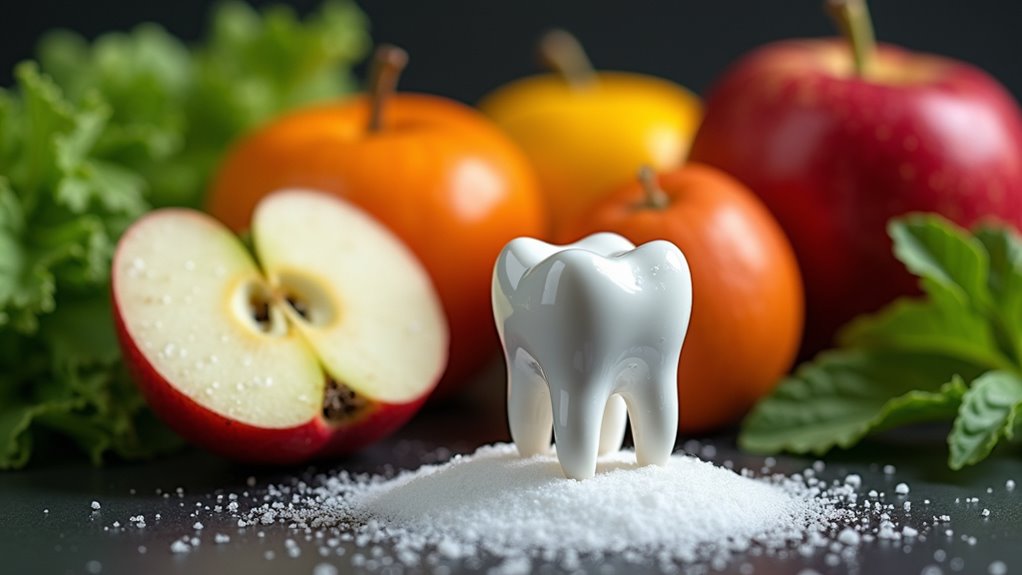
When you consume sugar, it interacts with bacteria in your mouth, creating acids that can erode your enamel.
This acid production increases with sugary foods, making tooth decay more likely.
Understanding this connection can help you make better choices for your dental health.
Sugar’s Effect on Enamel
While sugar may satisfy your sweet tooth, it also poses a significant threat to your dental health. It contributes to enamel erosion, making teeth vulnerable to decay.
When you consume sugary foods, they’re transformed into acids by bacteria in your mouth, further weakening your enamel. This process can be mitigated by opting for sugar alternatives and supporting enamel regeneration through proper nutrition.
Here are some ways to help protect your enamel:
- Choose sugar alternatives like stevia or erythritol.
- Increase your intake of calcium and vitamin D for stronger teeth.
- Stay hydrated to stimulate saliva production, which helps remineralize enamel.
- Limit acidic beverages that can amplify enamel wear.
Being mindful of your sugar intake can promote healthier, stronger teeth for you and those you care about.
Bacteria and Acid Production
Understanding the relationship between sugar consumption and dental health requires a closer look at the role of bacteria.
When you consume sugar, harmful bacteria in your mouth feed on it, leading to acid production. This process disrupts the bacterial balance, tipping it in favor of cavity-causing organisms.
As these bacteria thrive, they produce acids that can erode enamel, ultimately causing tooth decay.
Maintaining acid regulation is vital in protecting your teeth. You can help manage this by limiting sugary foods, choosing whole grains, and incorporating fruits and vegetables.
Regular brushing and flossing are essential for removing food particles and bacteria, promoting a healthier oral environment.
Hydration and Its Impact on Oral Health

Hydration plays an essential role in maintaining oral health, influencing everything from saliva production to the overall balance of your mouth’s ecosystem.
Adequate hydration benefits you by promoting saliva flow, which helps wash away food particles and neutralizes acids. When you’re well-hydrated, you also support your body’s ability to fight off harmful bacteria, reducing the risk of dental problems.
To stay hydrated, consider these water sources:
- Drinking plain water throughout the day
- Consuming water-rich fruits and vegetables
- Infusing water with natural flavors (like lemon or cucumber)
- Opting for herbal teas without caffeine
Practical Tips for Incorporating Nutritional Powerhouses Into Your Diet
Incorporating nutrient-dense foods into your diet is a straightforward way to boost your oral health.
By planning your meals thoughtfully and staying hydrated, you can guarantee your teeth get the essential nutrients they need.
Here are some practical tips to help you make these healthy choices.
Nutrient-Dense Food Choices
While making nutrient-dense food choices may seem challenging, it can be surprisingly straightforward with a little planning. Incorporating foods that enhance nutrient absorption and offer superfoods benefits is essential for maintaining strong and healthy teeth.
Here are some practical tips to help you serve both yourself and others effectively:
- Leafy greens: Spinach and kale are rich in calcium.
- Nuts and seeds: Almonds and chia seeds provide essential vitamins and minerals.
- Berries: Blueberries and strawberries are packed with antioxidants that promote oral health.
- Yogurt: A probiotic source that supports a healthy oral microbiome.
Hydration and Oral Health
Maintaining a healthy mouth requires more than just brushing and flossing; staying well-hydrated plays an essential role in oral health. When you’re properly hydrated, your saliva production increases, which is vital for neutralizing acids and washing away food particles.
To boost your hydration, focus on water as your primary hydration source throughout the day. Incorporate hydrating foods like cucumbers, watermelon, and oranges into your meals and snacks. Herbal teas can also be beneficial, especially those without caffeine.
Aim for at least eight cups of water daily, adjusting for activity levels. As you prioritize hydration, you’ll not only support your overall health but also enhance your oral health, helping you serve others with a brighter smile.
Meal Planning Strategies
When you plan your meals thoughtfully, you can effortlessly incorporate nutritional powerhouses into your diet that promote healthy teeth. Meal prep plays an essential role in ensuring you consistently choose nutrient-rich options.
Here are some practical strategies to optimize your meal planning:
- Focus on whole foods: Include fruits, vegetables, nuts, and lean proteins for their vitamins and minerals.
- Practice portion control: Balance your plate with the right amounts of food to avoid excess and maintain oral health.
- Snack wisely: Choose tooth-friendly snacks like cheese, yogurt, or crunchy veggies instead of sugary options.
- Stay organized: Make a weekly meal schedule and grocery list to keep you on track with nutritious choices.