
Stress greatly impacts your dental health through a condition called bruxism, where you grind your teeth unconsciously. This response to anxiety can lead to tooth wear, jaw pain, and tension headaches. If not managed, bruxism can result in serious complications, like TMJ disorders and chronic fatigue. To effectively combat this issue, it’s crucial to implement stress management techniques. Discovering the signs and solutions can help you preserve your dental health and improve your overall well-being.
Summary Point
- Bruxism, or teeth grinding, is often a stress response that can lead to serious dental issues.
- Symptoms include jaw pain, increased tooth wear, tension headaches, and disrupted sleep.
- Untreated bruxism can erode enamel, increase the risk of fractures, and lead to TMJ disorders.
- Effective stress management techniques like mindfulness and deep-breathing can alleviate bruxism symptoms.
- Regular dental check-ups are crucial for managing bruxism and preventing long-term dental damage.
The Link Between Stress and Bruxism

When you’re under stress, your body can react in various ways, one of which is bruxism, or teeth grinding. This condition often arises as a subconscious response to anxiety, tension, or emotional strain.
Managing stress effectively is essential, as prolonged bruxism can jeopardize your dental health, leading to tooth wear, jaw pain, and even temporomandibular joint (TMJ) disorders.
Recognizing the connection between stress and bruxism allows you to implement targeted stress management techniques, like mindfulness and relaxation exercises. These strategies not only reduce your stress levels but also contribute to better dental health by minimizing the risks associated with teeth grinding.
Prioritizing both mental and oral well-being can significantly enhance your quality of life and your ability to serve others effectively.
Common Symptoms of Teeth Grinding
Bruxism can manifest through various symptoms that may indicate the condition’s presence.
You might experience recurring jaw pain, particularly upon waking, which can signal that you’ve been grinding your teeth during the night.
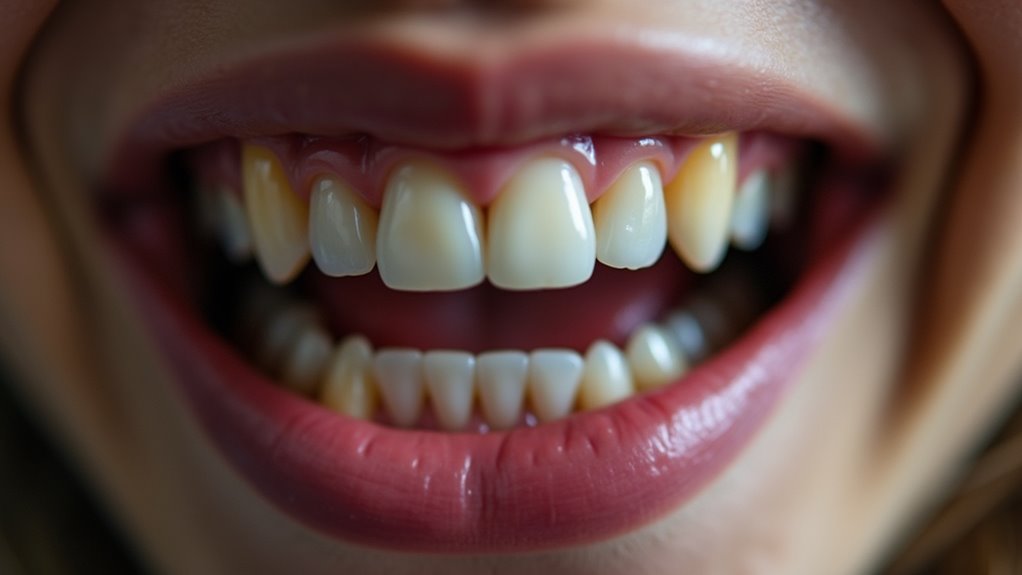
Additionally, you may notice increased tooth wear, as grinding can gradually erode enamel, leading to sensitivity or even damage.
Tension headaches are another common symptom, often resulting from muscle strain.
Other indicators include heightened fatigue due to disrupted sleep patterns and a clicking or popping sound in your jaw.
It’s essential to identify these symptoms early, as they serve as important signals for seeking appropriate care and support, ensuring you maintain both oral health and overall well-being.
Consequences of Untreated Bruxism
Ignoring the symptoms of teeth grinding can lead to several serious consequences. If you leave bruxism untreated, you risk:
- Tooth Wear: Continuous grinding can considerably erode tooth enamel, leading to sensitivity and decay.
- Increased Dental Problems: Untreated bruxism can result in cracks, chips, or complete tooth loss, requiring costly restorations.
- Jaw Disorders: Prolonged grinding may cause temporomandibular joint (TMJ) disorders, resulting in pain and reduced jaw mobility.
- Sleep Disruption: Bruxism frequently interrupts your sleep cycle, leading to chronic fatigue and affecting overall health.
Addressing these consequences quickly can preserve your dental health and improve your quality of life.
Prioritizing treatment can help you serve others effectively and enjoy healthier days ahead.
Strategies to Manage Stress and Bruxism
Many people don’t realize that managing stress can greatly reduce the severity of bruxism. To effectively combat this condition, incorporating mindfulness techniques into your daily routine can be highly beneficial. By focusing on the present and engaging in deep-breathing exercises, you can lower your stress levels and alleviate grinding tendencies.
Additionally, relaxation exercises such as progressive muscle relaxation or gentle yoga help release tension held in the body. Creating a calming bedtime routine can also facilitate better quality sleep, minimizing bruxism occurrences.
Try journaling to express emotions or seeking social support to discuss stressors. By prioritizing these strategies, you’re not only managing stress but also protecting your dental health, ultimately enabling yourself to serve others more effectively.
When to Seek Professional Help for Bruxism
Understanding when to seek professional help for bruxism is vital for safeguarding your dental health. If you experience any of the following symptoms, consider consulting a dental professional:
- Persistent Tooth Pain: Ongoing discomfort or sensitivity may signal underlying damage.
- Frequent Headaches: Regular tension headaches can be a sign of clenching and grinding.
- Sleep Disturbances: If your sleep is disrupted due to jaw pain or teeth grinding, it’s time for an evaluation.
- Visible Wear and Tear: Noticeable enamel loss or cracks in your teeth suggests the need for immediate attention.
Regular dental evaluations are essential for managing bruxism effectively and preventing further complications.
Don’t hesitate to reach out to a professional if you’re facing any of these issues.