
When considering dental implants, you’re paying for several key components: the initial consultation that aligns your goals, advanced diagnostic imaging for accurate placement, the actual implant procedure involving high-quality materials and skilled labor, and the abutment and crown for a natural look. Additionally, ongoing maintenance and possible future repairs can affect costs long-term. Understanding each aspect helps you appreciate the investment in your smile. Explore further to uncover all the factors influencing your overall costs.
Summary Point
- The cost of dental implants includes initial consultations, treatment planning, and diagnostic imaging to ensure accurate placement and longevity.
- Surgical expenses cover the complexity of the procedure, materials used, and professional fees for oral surgeons and dental assistants.
- Abutment and crown materials significantly impact the overall cost, with various options influencing stability, appearance, and durability.
- Ongoing maintenance, such as regular cleanings and check-ups, is essential for the longevity of implants and contributes to total costs.
- Potential additional costs may arise from repairs or replacements, highlighting the importance of insurance coverage for long-term affordability.
The Initial Consultation: Understanding Your Needs

When you schedule your initial consultation for dental implants, you’re taking an essential step toward a healthier smile.
During this visit, you’ll discuss your treatment expectations in detail, allowing you to align your goals with the dental professional’s recommendations. The dentist will assess your oral health and address any patient concerns, such as the implant process, recovery time, and potential risks.
This transparent dialogue fosters trust and guarantees you’re fully informed before proceeding. By clearly outlining the treatment plan, including timeframes and costs, you’ll have a thorough understanding of what to anticipate.
This initial encounter not only prepares you for the journey ahead but also empowers you to make informed decisions for your dental health.
Diagnostic Imaging: Setting the Foundation
Before proceeding with dental implant surgery, diagnostic imaging plays an important role in establishing a solid foundation for your treatment.
Utilizing advanced diagnostic techniques, such as panoramic X-rays and 3D cone beam CT scans, allows your dental professional to assess your jawbone structure and overall oral health accurately. The imaging technology provides precise measurements, enabling your provider to determine the appropriate implant size and placement.
Understanding these details is essential, as they influence the success of your implant procedure and long-term durability. Ensuring accurate imaging not only aids in planning but also minimizes the risk of complications, ultimately enhancing the quality of care you can offer your patients.
Investing in effective diagnostic imaging is crucial in delivering favorable outcomes.
The Implant Procedure: Materials and Labor
While understanding the costs associated with dental implants, it’s crucial to take into account both the materials used and the labor involved in the procedure.
The implant materials, such as titanium or zirconia, play a major role in determining the overall cost. High-quality materials enhance durability and biocompatibility, ensuring long-term success.
Additionally, the complexity of surgical techniques impacts labor costs. Skilled professionals, including oral surgeons and dental assistants, require compensation for their expertise and time.
Factors like the type of anesthesia administered and the clinic’s location further influence labor fees.
The Abutment and Crown: Finalizing Your Smile
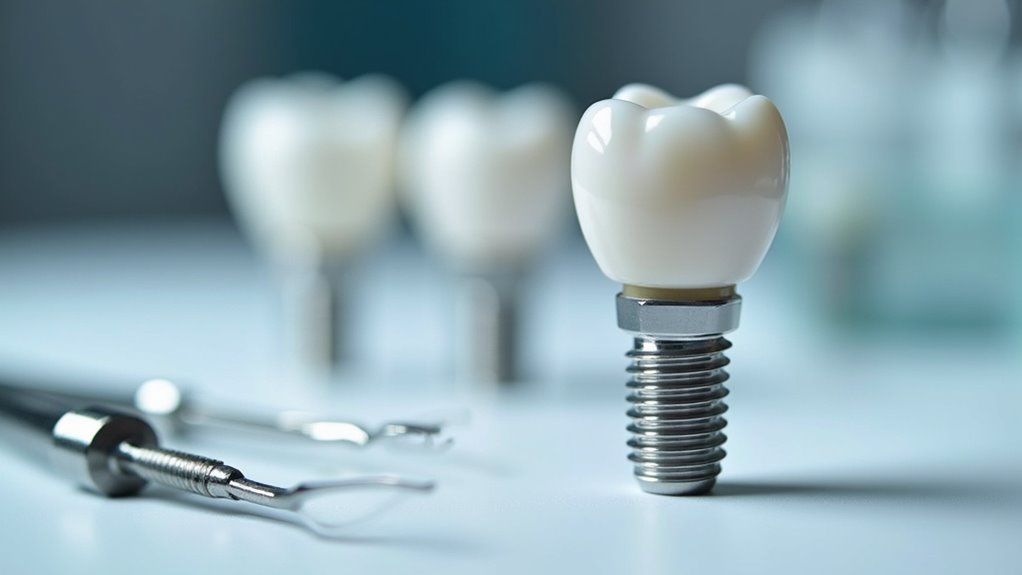
After the implant procedure, the next critical step in achieving your new smile involves the abutment and crown placement. The abutment acts as a connector between your dental implant and the crown, guaranteeing stability and proper alignment. Abutment materials can vary, commonly including titanium or zirconia, each offering different benefits in durability and aesthetics.
Once the abutment is securely placed, it’s time to choose your crown options. Crowns can be made from various materials such as porcelain, ceramic, or metal. Your choice affects not only the appearance but also the longevity of your implant.
Collaboration with your dentist guarantees the selected materials and designs will fit your lifestyle and smile goals, providing you with a custom, long-lasting solution.
Additional Costs: Maintenance and Follow-up Care
Having successfully placed the abutment and crown, it’s important to contemplate the ongoing investments necessary for maintaining your dental implants.
These additional costs often extend beyond the initial procedure and can vary based on your individual needs.
Consider the following aspects:
- Preventive Care: Regular cleanings and check-ups help guarantee the longevity of your implants.
- Follow-up Appointments: You’ll need periodic visits to assess the health of your implants.
- Insurance Coverage: Check if your insurance covers part of these maintenance costs; it could alleviate some financial burden.
- Potential Repairs: If any issues arise, repairs or replacements can add extra costs over time.
Planning for these expenses will enhance your experience and guarantee your implants serve you well for years.